

Yurina Hirate is a Japanese singer, actor, model, and performer whose career has moved through several distinct chapters: idol group breakthrough, dramatic stage presence, solo artistry, and screen acting. Many readers first discovered her as the striking center of Keyakizaka46, but her biography is larger than a single role in a group. She has become known for a performance language built around intensity, silence, expressive movement, and a refusal to fit neatly into one entertainment category.
This complete biography explains who Yurina Hirate is, why her career attracted attention so quickly, and how she developed from a teenage idol into a multi-field artist. It focuses on verified information from official profiles, primary announcements, and established film and awards records, while avoiding speculation about private matters. For readers interested in Japanese entertainment, artist biographies, idol history, or acting careers, Yurina Hirate offers a rare case study: a performer whose public image was shaped not only by popularity, but by artistic risk.
Early Life and Basic Profile

Yurina Hirate was born on June 25, 2001, in Aichi Prefecture, Japan. Official music-industry profile information lists her blood type as O and her height as 163 cm. In Japanese entertainment, such basic profile details are often presented as part of an artist’s public biography, but they tell only the beginning of her story. What made Hirate notable was not merely that she entered the entertainment industry young; it was the seriousness and emotional focus she brought to performance while still in her teens.
Her name is written in Japanese as 平手友梨奈 and commonly romanized as Yurina Hirate. In official English-language contexts, her family name may appear after her given name, while Japanese database entries often list her as Hirate Yurina. Both refer to the same artist. She is now officially presented as a singer, actor, and model, which reflects the range of work she has taken on since her group debut.
Aichi Roots and Early Public Life
Before becoming widely known, Hirate was a young performer from Aichi, a prefecture in central Japan with a strong cultural identity and proximity to major entertainment routes. Unlike some artists who begin with long child-actor resumes, Hirate’s public career became nationally visible through the idol audition system. This matters because her later reputation was formed in a high-pressure environment where music, choreography, television appearances, and fan culture all intersect.
In August 2015, she passed the first-generation audition for Keyakizaka46. At that point, she was still a teenager entering a newly formed group. The audition result placed her at the beginning of one of the most closely watched debuts in modern Japanese idol entertainment. From there, her career accelerated quickly.
Verified Profile Snapshot
- Full name: Yurina Hirate
- Japanese name: 平手友梨奈
- Date of birth: June 25, 2001
- Birthplace: Aichi Prefecture, Japan
- Profession: Singer, actor, and model
- Known for: Keyakizaka46, solo performance, and the film Hibiki
- Major acting recognition: Newcomer of the Year at the 42nd Japan Academy Film Prize
These facts establish the foundation of Yurina Hirate’s biography, but the more interesting part is how quickly her public identity became associated with artistic seriousness. She did not become known simply as a member of an idol group. She became known as a performer whose presence could define the emotional center of a song.
Rise With Keyakizaka46
Yurina Hirate’s rise began with Keyakizaka46, a Japanese idol group that debuted in the mid-2010s and quickly distinguished itself through a darker, more dramatic image than many mainstream idol acts. Official profile information states that Hirate passed the group’s first-generation audition in August 2015 and served as the choreography center from the group’s CD debut until January 2020. In idol terminology, the center is not just a front-row position. It is a role that visually and emotionally anchors the group, especially in music videos, performances, and promotional stages.
For Keyakizaka46, that role was unusually important. The group’s songs often leaned into themes of resistance, isolation, youth conflict, and inner pressure. Hirate’s facial expression, body language, and controlled intensity became a central part of how audiences understood the group. She was not presented as a cheerful mascot or a conventional variety-show personality. Instead, she became associated with a more serious, almost theatrical mode of idol performance.
The Meaning of Being Center
In many Japanese idol groups, the center position can rotate depending on the song, concept, or management strategy. In Hirate’s case, her center role became closely tied to Keyakizaka46’s identity. Viewers who encountered the group through music videos or televised stages often saw her first: focused, unsmiling, and fully committed to the song’s emotional world. That consistency made her one of the most recognizable figures in the group.
Her rise also shows how idol performance can function as a form of storytelling. A center must do more than stand in front. The center must make the viewer believe in the concept. Hirate’s strength was her ability to make choreography feel like drama. Whether a song suggested anger, alienation, or rebellion, she performed as though the emotion had a narrative life inside her body.
Why Her Stage Presence Stood Out
Several qualities helped Yurina Hirate stand apart during the Keyakizaka46 years:
- Emotional restraint: She often communicated intensity without exaggerated facial expression.
- Physical commitment: Her choreography carried a sense of urgency and tension.
- Conceptual clarity: She performed as if each song had a character and inner conflict.
- Visual focus: Her presence drew attention even in large group formations.
- Unusual idol image: She helped broaden perceptions of what a Japanese idol center could be.
This is one reason Yurina Hirate’s biography should not be reduced to popularity rankings or fandom metrics. Her impact was aesthetic as much as commercial. She became a figure through whom audiences debated what idol performance could express.
Departure From Keyakizaka46
On January 23, 2020, Keyakizaka46’s official website announced personnel changes involving several members. The announcement confirmed that Yurina Hirate would leave the group, using the group’s official wording for her departure. It also stated that other members were graduating or pausing activities. Because the announcement is brief, responsible biography writing should avoid adding motives that were not officially stated there.
Her departure marked a significant turning point. For fans, it ended the period in which Hirate was publicly identified as the central face of Keyakizaka46. For her career, it opened the path toward solo work and acting without the daily frame of group membership. In artist biography terms, this is the moment when her identity shifted from group-defined star to independent performer.
Why the 2020 Transition Matters
The 2020 departure is important because it separated two stages of her public life. Before it, most discussions of Yurina Hirate focused on how she shaped Keyakizaka46. After it, the key question became what kind of artist she would become outside that structure. Would she continue in music? Would she focus on acting? Would she keep the same intense image or rebuild herself in a different direction?
Rather than disappearing from public view, Hirate continued to be positioned as a solo artist. Official management materials now describe her across multiple roles, including singer, actor, and model. That framing suggests a flexible career rather than a single-track move from idol to actress or idol to solo singer.
Careful Reading of the Announcement
Because celebrity departures often generate rumors, it is useful to separate confirmed facts from interpretation:
- Confirmed: The official Keyakizaka46 announcement was dated January 23, 2020.
- Confirmed: The announcement stated that Yurina Hirate would leave the group.
- Confirmed: Official profile materials describe her as active as a core Keyakizaka46 member until January 2020.
- Interpretation: Her departure created a new artistic phase, but the exact private reasons should not be invented.
This cautious approach matters for any complete biography. Yurina Hirate’s career is compelling enough without unsupported claims. The verified timeline already shows a major transformation: audition in 2015, group debut in 2016, film breakthrough in 2018, departure in 2020, and solo activity afterward.
Solo Music and Performance Style
After Keyakizaka46, Yurina Hirate began a new phase as a solo performer. Official management information lists 2020 as the start of her solo activities. This did not erase her group history, but it changed the way audiences viewed her. Instead of being one focal point inside a large formation, she could now become the primary subject of the entire performance.
Her solo identity continues many qualities associated with her earlier work: intensity, atmosphere, visual storytelling, and a preference for emotionally charged presentation. Yet solo work also gives her more space to explore pacing, silence, staging, and character-like expression. The result is an artistic image that sits between pop performance, contemporary dance, music video drama, and acting.
Performance as Storytelling
One of Hirate’s defining traits is that she performs songs as if they are scenes. This is why many fans discuss her not only as a singer, but also as an interpreter. Her body language can suggest resistance, exhaustion, defiance, or vulnerability. Her facial expression often works through minimal shifts rather than broad theatricality. In a performance culture where constant brightness can be expected, that kind of restraint feels distinctive.
This approach also connects her music career to her acting career. A performer who understands how to hold silence, direct attention, and create tension can move naturally between stage and screen. Hirate’s solo style benefits from that overlap. Even when she is performing music, she often appears to be inhabiting a role or emotional state rather than simply presenting a song.
Current Artist Positioning
Cloud Nine’s official artist profile presents Yurina Hirate as a singer, actor, and model. It also lists recent official news connected with music releases and live activities, including information around a first album and Budokan-related live announcements in 2026. Because schedules and release information can change, readers should treat current projects as subject to official updates. Still, the overall direction is clear: Hirate remains active as a contemporary Japanese artist with music at the center of her public work.
Her solo music identity is important for SEO readers searching for Yurina Hirate biography, Yurina Hirate solo career, or who is Yurina Hirate. The answer is not simply that she was once an idol group center. She is an artist whose post-group career continues to develop through music, performance, acting, and visual presentation.
Acting Career and Hibiki Breakthrough
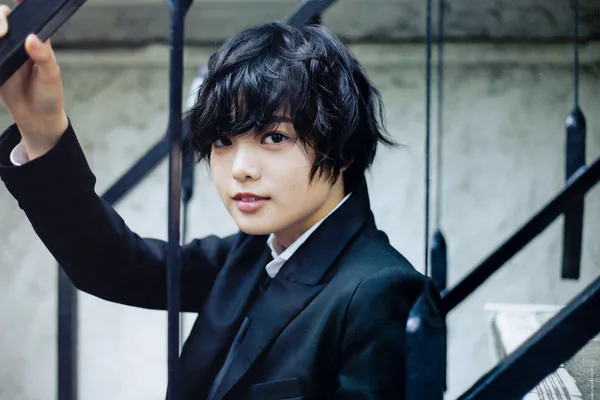
Yurina Hirate’s acting career gained major attention with the 2018 film Hibiki. According to the Japanese Film Database entry for the film, Hibiki was released in Japan on September 14, 2018, runs 106 minutes, and is categorized as a drama feature. The film was directed by Sho Tsukikawa and distributed in Japan by TOHO. Hirate is credited in the cast as Akui Hibiki, the central role.
The film is based on a manga by Mitsuharu Yanamoto, and the story follows a gifted teenage writer whose talent and uncompromising behavior disrupt the literary world around her. For Hirate, the role was a striking match with the qualities audiences already associated with her performance persona: intensity, distance, unpredictability, and emotional force. Yet film acting is not the same as stage performance. The camera sees smaller movements. A film role requires continuity, reaction, timing, and collaboration within a scripted narrative.
Why Hibiki Was a Defining Role
Hibiki mattered because it gave Hirate a leading screen role early in her acting career. Official music profile information describes the movie as her first film appearance and first starring role. That combination created a high bar. She was not easing into film through a small supporting part; she was carrying a feature drama built around a difficult protagonist.
Her character, Akui Hibiki, is not a soft entry point for an actor. The role asks for severity, intelligence, unpredictability, and moments of emotional opacity. For some performers, such a character could become one-note. Hirate’s public reputation helped make the casting feel plausible, because audiences already understood her as someone capable of communicating intensity through stillness.
From Idol Center to Film Lead
The move from idol center to film lead can be risky. Idol fame may draw viewers, but it can also invite skepticism from people who separate music performance from acting craft. Hirate’s recognition after Hibiki helped answer that skepticism. Her performance was not treated merely as a novelty by official awards bodies; it became part of the record of her artistic development.
The Japan Academy Film Prize’s 42nd awards records include her Newcomer of the Year recognition, while official profiles also list additional newcomer honors connected with film awards. This recognition is important because it widened her reputation beyond music fandom. It placed her in the conversation around young Japanese actors with serious screen potential.
Awards, Recognition, and Public Reputation
Yurina Hirate’s awards and recognition are central to understanding her public reputation. Her career has been shaped by more than visibility. She has received formal recognition for acting, and she has maintained a distinct artistic image that continues to attract discussion among fans and entertainment observers.
The most important confirmed acting recognition is her Newcomer of the Year award at the 42nd Japan Academy Film Prize for Hibiki. Official profile materials also list newcomer recognition from the Nikkan Sports Film Award / Yujiro Ishihara Award and the Japan Movie Critics Award. These honors helped position her as more than a popular idol crossing into film. They suggested that her screen work could be evaluated on performance terms.
Key Recognition in Her Career
- Keyakizaka46 center: Served as the group’s central performer from CD debut through January 2020, according to official profile information.
- Film breakthrough: Starred as Akui Hibiki in the 2018 drama feature Hibiki.
- Japan Academy Film Prize: Recognized as Newcomer of the Year at the 42nd awards.
- Additional newcomer honors: Official profiles list awards from the Nikkan Sports Film Award / Yujiro Ishihara Award and the Japan Movie Critics Award.
- Solo activity: Began solo work after leaving Keyakizaka46 and continues to be officially positioned across music, acting, and modeling.
Public Image and Critical Interest
Hirate’s public image is often described through words such as intense, enigmatic, expressive, and serious. Those descriptions can become clichés if used carelessly, but they point to something real in her work. She has repeatedly been associated with performances that feel emotionally charged rather than casually decorative. In group choreography, she could make the center position feel like a narrative burden. In film, she could bring stillness and tension to a character. In solo work, she can turn music performance into a visual scene.
This reputation also explains why Yurina Hirate remains a frequent subject for artist biography searches. She represents a type of Japanese entertainer whose career crosses boundaries: idol, dancer, singer, actor, model, and visual performer. Each label is accurate in part, but none captures the whole biography by itself.
Where Yurina Hirate Is Now
As of the latest official management information reviewed for this biography, Yurina Hirate is associated with Cloud Nine and is presented as a singer, actor, and model. Her official profile continues to list her career milestones, including Keyakizaka46 debut in 2016, the 2018 starring role in Hibiki, and the start of solo activities in 2020. Recent official news items also indicate continuing music-related activity, including album and live-event information in 2026.
Because entertainment schedules can change, a careful biography should avoid presenting future plans as guaranteed beyond official announcements. What can be said with confidence is that Hirate remains professionally active and that her current public positioning is multi-disciplinary. She is not being framed only as a former idol or only as an actor. Her management profile presents a broader artist identity.
Ongoing Career Themes
Several themes define Yurina Hirate’s current phase:
- Independence: Her post-Keyakizaka46 career is built around her own name rather than group membership.
- Performance intensity: Her solo identity continues to rely on emotionally focused presentation.
- Cross-media activity: Music, acting, modeling, and visual storytelling remain connected parts of her profile.
- Controlled public image: Official materials provide key facts, while her artistic presence often communicates through work rather than excessive explanation.
- Long-term curiosity: Fans and new viewers continue to follow how she will balance music and acting over time.
Why Her Present Status Matters
For readers asking who is Yurina Hirate now?, the answer is that she is a Japanese artist in an ongoing solo chapter. Her early fame came through Keyakizaka46, but her current profile is not limited to nostalgia for that period. The official arc of her career shows movement: debut, center role, film lead, awards recognition, group departure, solo activity, and continuing projects.
This makes her biography especially useful for readers who are discovering her through different entry points. Some may know her from Keyakizaka46 performances. Others may encounter her through Hibiki or later acting work. Others may find her through solo music releases or social media clips. All of those routes lead to the same larger picture: Yurina Hirate is an artist whose career has been shaped by transformation.
Artistic Identity and Performance Style
Yurina Hirate’s artistic identity is difficult to summarize because it depends on atmosphere as much as resume. Many entertainers can be described by a list of credits, but Hirate’s appeal often comes from how she occupies a performance. She can make a stage feel tense before singing a line. She can make stillness appear active. She can suggest interior conflict without explaining it directly. These qualities have helped her remain distinctive in a crowded entertainment landscape.
Her biography also raises a broader question: what makes an artist memorable? In Hirate’s case, the answer is not only technical skill or media exposure. It is the coherence of her public artistic language. Whether in Keyakizaka46, a film role, or solo performance, she is frequently associated with intensity and emotional concentration. That through-line gives her career a recognizable shape.
Not a Conventional Idol Narrative
Many idol biographies follow a familiar pattern: audition, training, debut, variety appearances, fan events, graduation, and a second career in acting or television. Yurina Hirate’s story includes some of those elements, but it does not feel conventional. Her center role was unusually concept-heavy, and her public image was never built primarily around approachability. Instead, she became known for carrying heavier emotional concepts within popular entertainment formats.
This is why comparing her only to other idols can miss the point. She belongs in idol history, but she also belongs in discussions about performance direction, image-making, and the boundary between pop music and acting. Her best-known work often asks viewers to read mood, gesture, and silence.
Visual Storytelling
Visual storytelling is one of Hirate’s strongest career themes. In music videos and live performances, she often appears less like a presenter and more like a character inside a dramatic world. Her movements can feel sharp, weighted, or resistant. Her gaze can carry narrative pressure. These qualities are useful in both music and screen roles, which helps explain why her transition into acting felt organic to many viewers.
For SEO readers, this is a key reason that searches for Yurina Hirate profile, Yurina Hirate career, and Yurina Hirate acting often overlap. Her career cannot be cleanly divided into separate boxes. Her music performance informs her acting, and her acting strengthens the dramatic quality of her music work.
Filmography and Screen Work Beyond Hibiki
Although Hibiki remains the most important film in Yurina Hirate’s early acting biography, official profile information also points to later screen roles. Sony Music Japan’s profile notes her appearances in The Night Beyond the Tricornered Window as Erika Hiura and The Fable: Chapter Two as Hinako Saba. These credits indicate that her acting career was not a one-time extension of idol fame, but part of a broader professional direction.
Screen work gives Hirate another way to use the qualities that made her visible on stage. A film role requires different discipline from live performance, but both depend on presence. Hirate’s acting interest lies in how she can hold attention without over-explaining a character. That skill is especially valuable in roles that involve mystery, conflict, or emotional reserve.
Hibiki as the Foundation
Hibiki remains foundational because it created an official turning point in her public record. It was her film debut, her first starring role, and the source of major newcomer recognition. The film’s story of a gifted, uncompromising young writer also aligned with the public sense of Hirate as a performer who resisted easy categorization. That alignment made the role more than a credit. It became part of her artistic mythology.
Acting as Career Expansion
For artists who begin in idol groups, acting can become a way to extend visibility after graduation or departure. In Hirate’s case, acting also seems connected to her core performance instincts. Her strength is not simply that she can appear in a film. It is that her presence naturally creates questions: What is the character thinking? What pressure is beneath the surface? What emotion is being held back?
Those questions are useful for dramatic storytelling. They also explain why her acting work matters in a complete biography. Yurina Hirate is not only an artist with a music career and separate acting credits. She is a performer whose artistic language travels between mediums.
Why Yurina Hirate Remains Influential
Yurina Hirate remains influential because she changed how many viewers understood the center role in a Japanese idol group and then carried that distinctiveness into solo performance and acting. Her influence is not limited to sales figures or awards, although those are part of the story. It also lies in her ability to make popular entertainment feel serious, uneasy, and emotionally loaded.
For Keyakizaka46 fans, she is remembered as the performer who helped define the group’s early image. For film viewers, she is the newcomer who carried Hibiki and received major recognition. For current followers, she is a solo artist whose career still feels open-ended. That combination gives her biography lasting relevance.
Three Reasons Her Career Stands Out
- She made the center role dramatic: Hirate showed that an idol center could function almost like the protagonist of a performance.
- She crossed mediums credibly: Her movement from group performance to film acting was supported by official awards recognition.
- She maintained mystery: Her public image leaves space for interpretation, which keeps audiences engaged with her work.
Influence is often easiest to see when an artist changes audience expectations. Hirate did that by making intensity a core part of idol performance. She also challenged the idea that an idol’s next chapter must be predictable. Her career after Keyakizaka46 has remained focused on artistic identity rather than simple reinvention.
Frequently Asked Questions About Yurina Hirate
Who is Yurina Hirate?
Yurina Hirate is a Japanese singer, actor, model, and performer from Aichi Prefecture. She became widely known as the center of Keyakizaka46 and later continued as a solo artist and actor.
When was Yurina Hirate born?
She was born on June 25, 2001. Official profiles list Aichi Prefecture, Japan, as her birthplace.
What group was Yurina Hirate in?
Yurina Hirate was a first-generation member of Keyakizaka46. Official profile information states that she served as the group’s center from its CD debut and was active as a core member until January 2020.
When did Yurina Hirate leave Keyakizaka46?
Keyakizaka46’s official website announced her departure on January 23, 2020. The announcement should be treated as the primary confirmed source for the timing of her exit.
What movie made Yurina Hirate known as an actor?
Her major acting breakthrough was the 2018 film Hibiki, in which she played Akui Hibiki. The role brought her Newcomer of the Year recognition at the 42nd Japan Academy Film Prize.
Is Yurina Hirate still active?
Yes. Official management information presents her as active as a singer, actor, and model, with recent news connected to music and live activities. Specific schedules should always be checked through current official announcements.
Conclusion
Yurina Hirate’s biography is the story of an artist who became visible very young and then continued to evolve beyond the role that first made her famous. Born in Aichi Prefecture in 2001, she entered Keyakizaka46 through the first-generation audition in 2015, became the group’s defining center, starred in Hibiki in 2018, received major newcomer acting recognition, left Keyakizaka46 in January 2020, and continued into solo activity.
What makes her career distinctive is not only the sequence of milestones, but the consistency of her artistic presence. Whether standing at the center of a group formation, carrying a film as Akui Hibiki, or building a solo identity, Yurina Hirate has remained associated with emotional intensity, visual storytelling, and disciplined restraint. She is best understood not simply as a former idol or a young actor, but as a multi-disciplinary Japanese artist whose work continues to invite close attention.
For anyone asking, Who is Yurina Hirate?, the most accurate answer is this: she is a singer, actor, model, and performer whose influence began with Keyakizaka46 and expanded through solo music and award-recognized acting. Her career is still unfolding, but her place in modern Japanese entertainment is already significant.
Official references
- Cloud Nine Yurina Hirate Official Artist Profile – Current management profile with basic artist facts, current roles, social links, and recent official news for Yurina Hirate.
- Sony Music Japan Yurina Hirate Official Profile – Official music-industry profile covering birth date, birthplace, physical profile, Keyakizaka46 career, solo transition, acting debut, and awards.
- Keyakizaka46 Official Website Announcement – Primary group announcement confirming Yurina Hirate's January 23, 2020 departure from Keyakizaka46.
- Japan Academy Prize Official 42nd Awards Page – Official awards record confirming Yurina Hirate's Newcomer of the Year recognition for Hibiki.
- Japanese Film Database JFDB: Hibiki – Authoritative film database entry for Hibiki with release date, cast credit, role name, production details, and official film links.
