
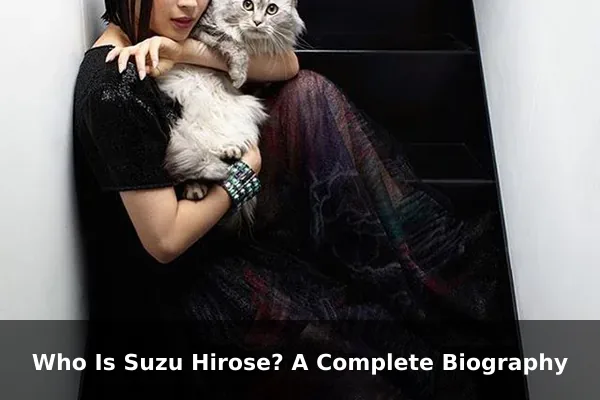
Suzu Hirose is a Japanese actor and model whose career has grown from teen-oriented media into some of the most visible film and television work in modern Japanese entertainment. For readers searching for Who Is Suzu Hirose? A Complete Biography, the answer begins with a young performer from Shizuoka Prefecture and expands into a career that includes acclaimed cinema, national television, awards recognition, stage work, advertising, and radio.
Her official agency profile identifies her as Hirose Suzu, born on June 19, 1998, from Shizuoka Prefecture, and represented through the FOSTER group. What makes her biography especially interesting is the speed and range of her rise. She moved from early television appearances and photo books into major projects such as Our Little Sister, Chihayafuru, The Third Murder, and NHK’s landmark morning drama Natsuzora. She has also maintained an ongoing public presence through radio and commercial work, which helps explain why her name remains familiar well beyond film fans.
This complete biography focuses on verified career milestones rather than rumor or private speculation. It covers Suzu Hirose’s early profile, entertainment debut, breakthrough roles, NHK achievement, film career, award history, public image, and current media work as of the latest available official sources.
Early Life and Basic Profile

Suzu Hirose was born on June 19, 1998, in Shizuoka Prefecture, Japan. Her official FOSTER profile lists her height as 159 cm and her blood type as AB, details commonly included in Japanese artist profiles. In professional credits, her name is usually written in English as Suzu Hirose or in Japanese order as Hirose Suzu.
She belongs to the generation of Japanese screen performers who became widely known during the 2010s, a period when the line between modeling, television drama, film, voice acting, and advertising was especially fluid. Hirose’s career reflects that cross-platform pattern. Rather than being known for only one type of work, she built recognition through a mix of youth dramas, manga adaptations, serious director-led films, national broadcaster projects, and brand campaigns.
In an artist biography context, Suzu Hirose is best understood as a screen actor first, with modeling and media hosting as important supporting parts of her public profile. Her early image was youthful and approachable, but her later roles show a performer trusted with emotionally complex characters, period settings, literary adaptations, and projects by major Japanese filmmakers.
Core Public Profile
- Professional name: Suzu Hirose
- Date of birth: June 19, 1998
- Birthplace: Shizuoka Prefecture, Japan
- Main profession: Actor and model
- Agency: FOSTER group, listed on her official FOSTER profile
- Known for: Japanese film, television drama, radio, stage, and commercials
Her public biography is unusually dense for someone still in her twenties. By 2026, official listings already include major film awards, multiple Japan Academy Film Prize acknowledgments, a Cannes-linked filmography, a lead role in an NHK asadora, and continuing media work through TOKYO FM.
How Suzu Hirose Entered Entertainment
Suzu Hirose entered the entertainment industry through the kind of multi-track route common among Japanese actors of her generation. She became known through youth-facing media and gradually expanded into acting. Early in her career, official agency records list television drama appearances in 2013, including Kasuka na Kanojo, TAKE FIVE, and NHK’s Gekiryu: Watashi o Oboete Imasu ka?. These credits show that her acting career began with supporting television work before she moved into more prominent roles.
Her early public development also included photo books and radio. The agency chronology lists her first photo book, suzu, in 2014, followed by later photo books in 2016 and 2018. It also lists a TOKYO FM role connected to SCHOOL OF LOCK! GIRLS LOCKS! from 2013 to March 2017. That combination of visual media, radio, and acting helped build a recognizable identity before she became a major film lead.
The Importance of Early Television
Early television roles matter in Suzu Hirose’s biography because they show how quickly she moved from small screen exposure into headline projects. Japanese television drama often acts as a training ground for young actors, requiring tight production schedules, clear emotional delivery, and the ability to make a character understandable in limited screen time. For Hirose, those first drama appearances created the foundation for later lead roles.
By 2015, she was no longer only a young actor appearing in ensemble projects. Her official credits list Gakko no Kaidan as a starring role in an NTV serial drama. This was a major step because a starring television drama role requires the actor to carry audience attention across multiple episodes. It also positioned her as more than a model or rising personality; it introduced her as a screen performer with leading-role potential.
From Youth Image to Screen Credibility
Hirose’s early image was closely tied to youth culture, but her career did not remain limited to light teen roles. The shift from early dramas to major films happened quickly. By 2015 and 2016, she was appearing in projects that placed her alongside experienced directors and established casts. That transition is one reason her biography stands apart from many standard celebrity profiles: her career was not simply a popularity story, but a progression into critically visible cinema.
Breakthrough Roles in Film and Television
Suzu Hirose’s breakthrough is usually associated with the middle of the 2010s, when she appeared in a sequence of high-profile film and television projects. The most important early film was Our Little Sister, known in Japanese as Umimachi Diary. Directed by Hirokazu Kore-eda, the film was listed by the Festival de Cannes in the 2015 Competition, and Hirose is credited by Cannes as a performer in the film.
Our Little Sister was significant because it connected Hirose with international festival cinema early in her career. The film’s quiet family drama required a naturalistic performance style, very different from more exaggerated youth entertainment. For an actor still building her name, working in a Kore-eda film brought visibility among critics, festival audiences, and Japanese filmgoers who followed serious domestic cinema.
Chihayafuru and Mainstream Recognition
After Our Little Sister, Hirose’s profile expanded further through Chihayafuru, a live-action film series based on the popular manga about competitive karuta. Her official agency biography lists the 2016 Chihayafuru films and the 2018 film Chihayafuru: Musubi as starring roles. These projects helped make her familiar to a broad younger audience and showed that she could lead commercially visible adaptations.
The importance of Chihayafuru lies in its balance of sports-like competition, friendship, school life, and emotional growth. Hirose’s role needed energy, sincerity, and enough dramatic clarity to make karuta feel cinematic. For many viewers outside Japan, Chihayafuru is one of the first titles that appears when exploring Suzu Hirose’s filmography.
Other Key Mid-2010s Projects
Hirose’s official credits during this period also include The Boy and the Beast, where she worked as a voice actor, Your Lie in April, Rage, Cheer Dance, Fireworks, and Sensei!. These projects show a fast-moving career across genres. Some were youth romances or school stories; others were ensemble dramas or animated features. Taken together, they broadened her appeal and gave her experience with different production styles.
Her role in The Third Murder became especially important for critical recognition. The official FOSTER profile lists her 2018 Japan Academy Film Prize best supporting actress award connected to this film. It was another Hirokazu Kore-eda project, and it helped reinforce her credibility beyond commercial youth roles.
Major Career Milestone: NHK’s Natsuzora
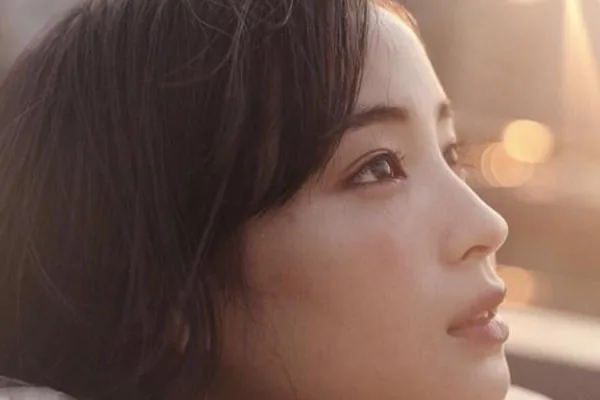
One of the defining moments in Suzu Hirose’s biography is her lead role in NHK’s Natsuzora. The official agency biography identifies the drama as the 100th NHK asadora, with Hirose listed as the heroine. In Japan, an asadora, or morning serial drama, is one of the most culturally visible television formats. Being selected as the heroine of the 100th installment marked a major national-profile achievement.
Natsuzora aired in 2019 and followed a heroine connected to postwar life and animation. The role mattered not only because of its visibility, but also because of what it represented in Hirose’s career. She had already become a strong film presence, yet an NHK morning drama reaches a different audience: families, older viewers, daily television watchers, and people who follow Japanese cultural history through long-running broadcaster traditions.
Why an Asadora Role Matters
For Japanese actors, an asadora heroine role can become a career landmark. It often requires months of sustained performance, daily audience connection, and the ability to carry an emotional arc over a long narrative. The heroine is expected to be memorable, relatable, and resilient, while also fitting the tone of NHK’s broad public-service storytelling.
For Hirose, Natsuzora confirmed that she could occupy one of the most demanding spaces in mainstream Japanese television. It also connected her with viewers who may not have followed her earlier films or youth dramas. After Natsuzora, her profile was not only that of a rising film actor; she became a national television figure with a milestone role attached to her name.
Connection to Her Later Career
The asadora role strengthened the bridge between Hirose’s mainstream popularity and her reputation for serious acting. In later years, her official biography continued to list major films, stage work, and dramatic television roles. Natsuzora sits at the center of that progression, because it showed that she could be both a popular face and a performer trusted with long-form storytelling.
Film Career and International Recognition
Suzu Hirose’s film career is one of the strongest reasons she remains an important Japanese artist. Her credits include work with major directors, manga adaptations, literary films, voice acting, and internationally visible cinema. The Festival de Cannes official profile lists her in connection with Umimachi Diary in Competition in 2015 and Toi Yamanami no Hikari in Un Certain Regard in 2025. That gives her filmography a verified international festival dimension.
The film known internationally as Our Little Sister introduced Hirose to many viewers outside Japan. Years later, A Pale View of Hills, based on Kazuo Ishiguro’s debut novel and listed at Cannes under Toi Yamanami no Hikari, added another international literary and festival-linked project to her career. The official Japan Academy Film Prize page also lists Hirose for Toi Yamanami no Hikari, describing her role as Etsuko in postwar Nagasaki.
Working Across Genres
Hirose’s filmography is notable because it does not depend on a single genre. Her official credits include school and youth stories such as Chihayafuru, emotional drama such as Our Little Sister, legal and psychological material in The Third Murder, animation voice work in The Boy and the Beast and Lupin III: The First, and later starring roles such as The Wandering Moon, Water Flows Toward the Sea, Kyrie, Yukite Kaeranu, and Kataomoi Sekai.
This range matters because it shows why Suzu Hirose’s biography cannot be reduced to one breakout title. She has repeatedly moved between popular entertainment and director-led dramatic work. That adaptability is a key part of her artistic identity.
International Visibility Without Losing Domestic Focus
Hirose’s international recognition has come mainly through film festivals and Japanese films that travel abroad, not through a full shift into overseas production. This is an important distinction. Her career remains deeply rooted in Japanese cinema and television, while selected projects have given her a broader international profile. For readers discovering Japanese actors through Cannes, Kore-eda films, or manga adaptations, Hirose is often one of the most visible names of her generation.
Awards and Critical Recognition
Suzu Hirose’s awards record is extensive, and the safest way to summarize it is to focus on officially listed achievements. Her agency profile lists numerous awards and nominations, including recognition from the Japan Academy Film Prize, Yokohama Film Festival, Blue Ribbon Awards, TAMA Film Awards, Mainichi Film Awards, Kinema Junpo, Hochi Film Awards, and Nikkan Sports Film Awards.
The Japan Academy Film Prize is especially important in her biography. Her official agency profile lists the 39th Japan Academy Film Prize Newcomer of the Year in 2016, the 40th Japan Academy Film Prize excellent lead and supporting actress recognition in 2017, and the 41st Japan Academy Film Prize best supporting actress award in 2018 for The Third Murder. Later entries include excellent actress recognition in the 2020s, including a 2026 excellent lead actress listing.
Why Her Awards Matter
Awards do not tell the whole story of an artist, but in Hirose’s case they confirm that her career has been recognized by both industry bodies and film-focused organizations. They also show continuity. Her earliest awards were tied to newcomer recognition and Our Little Sister; later recognition came from more mature roles, including supporting and lead performances.
This pattern is important because some young stars peak early and struggle to move into adult roles. Hirose’s award history suggests the opposite: she continued to receive recognition as her roles became more varied and demanding. That is one reason she remains a strong subject for an artist biography rather than only a popularity profile.
Selected Recognition Highlights
- 2015-2016: Newcomer and emerging actress recognition connected to Our Little Sister and early film work.
- 2016: Japan Academy Film Prize Newcomer of the Year listing.
- 2018: Japan Academy Film Prize best supporting actress award for The Third Murder, according to her official agency profile.
- 2019: Stage recognition connected to Q: A Night At The Kabuki, her first stage appearance.
- 2020s: Continued Japan Academy Film Prize and film award recognition for leading and supporting work.
- 2026: Official agency listings include lead actress honors from the Yokohama Film Festival and Blue Ribbon Awards, along with Japan Academy Film Prize excellent lead actress recognition.
Television, Radio, Stage, and Current Media Work
Although film is central to Suzu Hirose’s reputation, her career remains broader than cinema. Her television credits include early dramas, starring serial roles, special dramas, and major broadcaster work. The agency chronology lists projects such as anone, Nemesis, Air Girl, Yugure ni, Te o Tsunagu, Tsuda Umeko: Osatsu ni Natta Ryugakusei, and the 2025 TBS drama Kujaku no Dance, Dare ga Mita?.
Her stage career is also notable. In 2019, she made her stage debut in Q: A Night At The Kabuki, a NODA MAP production written and directed by Hideki Noda with music associated with Queen. Her agency profile lists stage awards connected to this project, and a later 2022 appearance is also recorded. Stage work adds another dimension to her biography because live performance requires a different technique from screen acting.
Radio and Public Voice
Radio has been part of Hirose’s public life from early in her career. Her official biography lists her TOKYO FM work on SCHOOL OF LOCK! GIRLS LOCKS! from 2013 to March 2017. More recently, the official TOKYO FM page for Hirose Suzu no Yohaku Jikan presents her as the personality of a program built around relaxed weekend time, music, film, drama, and conversation.
Her agency profile lists the TOKYO FM program as airing every Saturday at 15:30, though broadcast schedules can change and should always be checked through the official station page. This ongoing radio work is important because it shows that Suzu Hirose’s public presence is not limited to scripted performance. It gives audiences a more conversational way to encounter her personality and interests.
Commercial and Ambassador Work
Like many leading Japanese artists, Hirose has also appeared in commercials and brand campaigns. Her official profile lists commercial-related work for companies and brands including LION, FP Partner, Suntory, Mitsui Fudosan, AGC, Shiseido, Fujifilm, Senju Pharmaceutical, McDonald’s Japan, SoftBank, and Louis Vuitton ambassador-related work. These listings show her broad visibility in Japanese advertising and lifestyle media.
Commercial work should not be treated as separate from her artistic career. In Japan, major actors often maintain public familiarity through commercials, magazine features, broadcaster appearances, and radio. For Hirose, that media ecosystem supports her acting career while keeping her recognizable between film and drama releases.
Public Image and Acting Style
Suzu Hirose’s public image combines freshness, emotional directness, and professional seriousness. Early in her career, she was often associated with youth, school settings, and bright mainstream roles. Over time, her image matured through more restrained and psychologically complex performances. Her roles in films connected to Hirokazu Kore-eda, Lee Sang-il, Shunji Iwai, and other major directors helped frame her as an actor capable of nuanced work.
Her screen style is often strongest when a role requires quiet emotional pressure rather than only outward expressiveness. In Our Little Sister, the performance depends on natural presence within a family ensemble. In The Third Murder, the tone is more serious and morally unsettled. In later roles such as A Pale View of Hills, official award descriptions emphasize a subdued performance shaped around strength, fragility, and mystery.
Common Role Types
Across her filmography, several patterns appear. Hirose has often played characters dealing with growth, family, memory, social pressure, ambition, or emotional conflict. She has also played energetic leads in youth-oriented films, which gave her career mainstream accessibility. The combination of quiet drama and popular entertainment is central to her appeal.
- Coming-of-age heroines: Roles that focus on youth, self-discovery, friendship, and ambition.
- Family drama characters: Performances that depend on emotional realism and ensemble balance.
- Literary or prestige film roles: Projects tied to acclaimed directors, novels, or festival recognition.
- Television leads: Characters built for wide national audiences and serial storytelling.
- Voice roles: Animated projects where performance depends on vocal expression rather than physical presence.
Why Audiences Respond to Her
Audience response to Suzu Hirose often comes from the contrast between approachability and intensity. She can appear familiar and youthful in one role, then emotionally guarded or dramatic in another. That flexibility allows different audiences to claim different entry points into her career. Some viewers know her through Chihayafuru; others through Natsuzora, Kore-eda films, commercials, or recent dramas.
Quick Facts About Suzu Hirose
The following quick facts summarize the most useful verified points for readers who want a concise Suzu Hirose biography.
| Full professional name | Suzu Hirose, also presented as Hirose Suzu |
| Born | June 19, 1998 |
| Birthplace | Shizuoka Prefecture, Japan |
| Profession | Actor, model, radio personality, commercial performer |
| Agency | FOSTER group, according to her official profile |
| Height | 159 cm, as listed by her official profile |
| Early television credits | Kasuka na Kanojo, TAKE FIVE, Gekiryu |
| Major early film | Our Little Sister, listed at Cannes in 2015 |
| Major mainstream role | Chihayafuru film series |
| Major TV milestone | Heroine of NHK’s 100th asadora, Natsuzora |
| Notable award recognition | Japan Academy Film Prize recognition, including best supporting actress for The Third Murder |
| Current media work | Hirose Suzu no Yohaku Jikan on TOKYO FM, subject to official schedule updates |
Why Suzu Hirose Remains an Important Japanese Artist
Suzu Hirose remains important because her career connects several major lanes of Japanese entertainment. She is a film actor with festival-linked credits, a television heroine with NHK visibility, a commercial presence recognized by mainstream audiences, and a radio personality with an ongoing public voice. Few artists of her generation have moved so consistently between these spaces while continuing to receive official award recognition.
Her biography also shows how Japanese star careers often develop through layered exposure. A performer may begin with youth media, move into television drama, appear in films, work with major directors, take commercial campaigns, and then return to radio or stage. Hirose has followed that pattern, but with unusually strong results. She did not simply become famous; she accumulated a filmography that includes prestige cinema, popular adaptations, national broadcaster work, and repeated acting honors.
For international readers, Suzu Hirose is also a useful gateway into contemporary Japanese screen culture. Through her filmography, one can explore Kore-eda family drama, manga-to-film adaptation, NHK morning drama tradition, Japanese award systems, and the role of radio and commercials in sustaining a public career. Her work demonstrates that Japanese celebrity biography is not only about fame, but about the movement between art, industry, audience, and national media.
Conclusion
So, who is Suzu Hirose? She is a Japanese actor and model from Shizuoka Prefecture who rose from early television and youth media into a major career across film, drama, stage, radio, and advertising. Her official biography includes a Cannes-listed breakthrough in Our Little Sister, mainstream success through Chihayafuru, critical recognition for The Third Murder, national television prominence as the heroine of NHK’s 100th asadora Natsuzora, and continued work in major film and broadcast projects.
What makes Suzu Hirose’s complete biography compelling is the balance between popularity and artistic development. She has remained visible to general audiences while also building a serious acting record supported by official awards and internationally recognized film credits. As her career continues, she stands as one of the key Japanese screen artists of her generation: versatile, widely recognized, and still actively expanding the range of roles attached to her name.
Official references
- FOSTER Management Office – Hirose Suzu Official Profile – Her agency profile is the primary source for core biographical facts, representation, awards, and official career chronology.
- Japan Academy Film Prize Official Site – Official archive for verifying Japan Academy Film Prize nominations and awards tied to her film career.
- Festival de Cannes – Suzu Hirose Profile – Primary festival source for verifying Cannes-listed appearances and international film credits.
- NHK – Natsuzora Official Site – Official broadcaster source for verifying her lead role in NHK's 100th asadora, a major career milestone.
- TOKYO FM – Hirose Suzu no Yohaku Jikan – Official radio program page for confirming her current/ongoing media work as program personality.
