
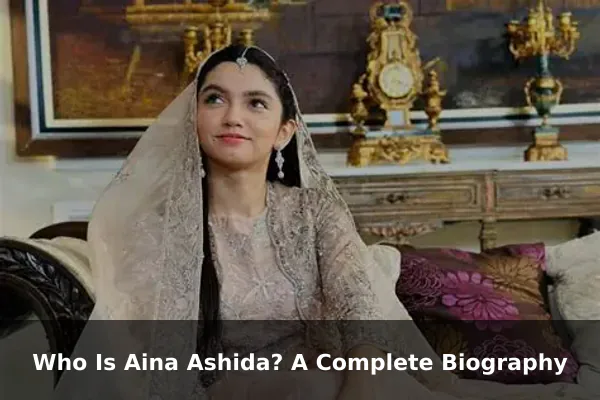
Who is Aina Ashida? For many English-language searchers, the name points to the Japanese actress, singer, voice performer, narrator, and public figure officially romanized as Mana Ashida. Her Japanese name is Ashida Mana, and the reading used by her official profiles is Mana, not Aina. Because the search phrase Aina Ashida appears online, this biography uses it as a helpful bridge while focusing on the verified artist behind the name.
Aina Ashida, more accurately Mana Ashida, is one of the rare Japanese performers who became nationally known as a child and continued to develop a serious, durable career into adulthood. She first drew major attention through emotional television drama performances, then expanded into film, voice acting, music releases, narration, educational television, commercials, and cultural ambassador work. Her career is especially interesting because it is not built on one viral moment alone; it shows an unusually long path through Japanese entertainment, from child-star phenomenon to respected young actress.
This complete biography is written with a fact-checked approach. Instead of relying on rumor, it prioritizes official agency information, record-label materials, film database credits, NHK-related broadcast context, and award records. That matters because biographies of young public figures can easily become distorted by fan summaries, mistranslated names, or outdated information. The result is a clearer look at who Aina Ashida is, what Mana Ashida is famous for, and why her career remains relevant today.
Quick Facts About Aina Ashida / Mana Ashida

The most important fact to understand is the name. Aina Ashida is a search variation, while Mana Ashida is the official romanized form commonly used in English-language industry listings. Her Japanese name is written as Ashida Mana, and her agency profile gives the reading as Ashida Mana. In Japanese name order, Ashida is the family name and Mana is the given name.
According to her official Jobbykids talent profile, Mana Ashida was born on June 23, 2004. As of June 2, 2026, she is 21 years old and will turn 22 on June 23, 2026. She is Japanese and is represented by Jobbykids, a talent agency known for child and young performers. Her professional fields include acting, television appearances, film, voice acting, narration, music, commercials, and cultural programs.
The core facts in this article are checked against official or industry-backed sources, including the Jobbykids official talent profile, the Universal Music Japan artist page, the JFDB profile for ASHIDA Mana, and the 34th Japan Academy Film Prize awards page. These sources help separate confirmed career details from casual online repetition.
Basic Profile
- Common search name: Aina Ashida
- Verified romanized name: Mana Ashida
- Japanese name: Ashida Mana
- Date of birth: June 23, 2004
- Nationality: Japanese
- Agency: Jobbykids
- Main professions: Actress, singer, voice actress, narrator, television personality
- Known for: Breakthrough child acting roles, film performances, music releases, voice work, and a long-running trusted public image
Early Life and First Steps in Entertainment
Aina Ashida’s public story is closely tied to Japan’s child-actor system, where young performers are trained for television, film, commercials, stage-style presentation, and voice work from an early age. Publicly available official profiles do not need to expose private family details to explain her career. What matters for an artist biography is that she entered professional entertainment very young and quickly showed the emotional control and camera awareness required for demanding drama roles.
Her agency, Jobbykids, became an important foundation for her early work. The agency profile lists a wide range of credits across film, drama, commercials, television, and music. That range shows how she was not presented only as a novelty child performer. From the beginning, her career moved across multiple formats, and that made her recognizable to different audiences: drama viewers, family television audiences, film fans, animation viewers, and music listeners.
Early child performers often face a difficult transition because audiences remember them in one specific age or role. Mana Ashida’s career is notable because her public image grew in stages. She was first seen as an exceptionally expressive child actress, then as a singer connected to a hit television drama, later as a narrator and voice performer, and eventually as a young adult actress trusted with more mature roles. This gradual expansion is central to understanding why the Aina Ashida biography remains different from a simple child-star profile.
Why Her Early Start Mattered
Her early start gave her years of experience before adulthood, but the value was not only in the number of roles. It was in the kind of roles she took. Some were emotionally heavy, some were family-friendly, and others required voice performance rather than screen presence. By working in several modes, she built technical flexibility at a time when many young actors are still discovering the basics of performance.
Breakthrough as a Child Actress
Mana Ashida’s breakthrough came through television drama and film roles that required more than cuteness or simple memorization. One of her most important early drama credits is Mother, where she played a vulnerable child whose emotional situation was central to the story. The official Japan Academy Film Prize page for the 34th awards notes that the drama brought her wide attention and made viewers notice the depth of her acting at a very young age.
Her film work during this period also mattered. The official Japan Academy Film Prize records list her Newcomer of the Year recognition for Ghost: In Your Arms Again. The same official page explains that she was six years old and became the youngest recipient of that newcomer recognition at the time. That achievement is more than a trivia point. It shows that film-industry evaluators recognized her performance ability early, not only her popularity.
Another major breakthrough was Marumo no Okite, a family drama that became closely associated with her public image. In the series, she played Kaoru, and the drama’s theme song Maru Maru Mori Mori! became a major pop-culture moment. The song was performed under the project name connected to Kaoru, Tomoki, and the dog character Mook, and it helped turn her into a household name beyond serious drama audiences.
What Made Her Child Performances Stand Out?
Several qualities made Aina Ashida’s early performances memorable. First, she could handle emotional scenes without making them feel mechanical. Second, she had the timing needed for family drama, where warmth and rhythm are as important as tears. Third, she worked well in ensemble casts, which is crucial for child actors because the story rarely depends on them alone. Finally, she carried a sense of sincerity that audiences interpreted as natural rather than manufactured.
- Emotional range: She handled sadness, uncertainty, curiosity, and warmth with unusual control for her age.
- Screen discipline: Her performances showed focus in scenes that required stillness as much as dialogue.
- Cross-generational appeal: Children recognized her, parents trusted her, and older viewers responded to her dramatic roles.
- Media adaptability: She moved from intense drama to family entertainment without losing credibility.
Major Film and Television Career Highlights

The official Jobbykids profile lists a long set of film and television credits, showing how broad Mana Ashida’s work has become. Her filmography includes live-action films, Japanese dubbing for international films, animation voice roles, and later projects that positioned her beyond the child-star period. This variety is one reason an Aina Ashida biography should not stop at her childhood fame.
Film Work
Her early film credits include Confessions, Ghost: In Your Arms Again, Bunny Drop, Hankyu Railway, LIAR GAME: Reborn, and The Floating Castle. These titles show that she was present in both serious drama and mainstream commercial projects. The JFDB listing for ASHIDA Mana provides an English-language industry point of reference for her Japanese film work, while her agency profile gives a fuller list of credits.
As she grew older, her film career continued with titles such as Round Table, Hoshi no Ko, Metamorphosis, and Cells at Work!. These roles are important because they show her transition from being cast as a child presence to being trusted with adolescent and young-adult characters. In Hoshi no Ko, for example, she led a coming-of-age story with emotional complexity. In Metamorphosis, she helped carry a gentle story about intergenerational friendship and fandom culture.
Her profile also includes major voice and dubbing work. She has been associated with Japanese-language roles in the Despicable Me franchise as Agnes, as well as voice roles in Magic Tree House, Pokémon the Movie: The Power of Us, Children of the Sea, Poupelle of Chimney Town, The House of the Lost on the Cape, and Lonely Castle in the Mirror. Voice work requires a different skill set from screen acting because emotion must be carried by sound alone. Her continued casting in this field suggests industry confidence in her voice performance and public recognition.
Television Drama and Broadcast Work
On television, Aina Ashida’s career includes a mixture of drama, family programming, and narration. Her agency profile lists roles in Mother, Marumo no Okite, Beautiful Rain, Ashita, Mama ga Inai, Our House, The Best Teacher, and Sayonara Maestro, among many others. It also lists NHK-related work such as the taiga drama Kirin ga Kuru and narration for the morning drama Manpuku.
Narration is especially significant in her development. A narrator must guide viewers without overwhelming the story, and this work helped position her as more than a performer who appears on screen. In NHK contexts, narration and historical drama participation also connect her to Japan’s public broadcasting tradition, where credibility, voice clarity, and measured presentation matter.
More recent listings in her agency profile include television and drama appearances such as Kataomoi, Totto no Ketsuraku Seishunki, and the mystery-themed television program Friday Mystery Club. Because current appearance lists can change, the safest reading is that these are official profile-listed recent or upcoming activities rather than a fixed lifetime summary.
Music Career and Official Releases
Aina Ashida is best known internationally as an actress, but her biography is incomplete without her music career. Universal Music Japan maintains an official artist page for Mana Ashida, confirming that her music work was not merely a promotional side note. It included singles, videos, an album, and concert-related releases.
Her most famous music moment is linked to Maru Maru Mori Mori!, the theme song associated with Marumo no Okite. The song became widely recognized in Japan because it combined a catchy melody, simple choreography, and the popularity of the drama. For a child performer, that kind of music success can be difficult to balance with acting credibility, but Mana Ashida managed to keep both identities visible.
Notable Music Releases
- Maru Maru Mori Mori! – a major family-pop hit connected to Marumo no Okite.
- Suteki na Nichiyobi: Gyu Gyu Good Day! – a bright solo single tied to a commercial context.
- Zutto Zutto Tomodachi – a song connected to a family and animation-friendly audience.
- Ame ni Negai o – a theme song associated with Beautiful Rain.
- Faito!! / Yuki – a later single documented on the Universal Music Japan artist page.
- Happy Smile! – an album release that reflects her early recording career.
Her music career should be understood in the context of Japanese entertainment, where young actors often take part in theme songs, commercial music, and television performances. In her case, however, the releases were visible enough to become part of her public identity. Even if acting remains the central pillar of her career, music helped broaden her audience and made her a recognizable presence in family-oriented popular culture.
Awards, Recognition, and Public Reputation
Recognition arrived early for Mana Ashida, and some of it is documented by official award bodies. The Japan Academy Film Prize’s 34th awards page confirms her Newcomer of the Year recognition for Ghost: In Your Arms Again. The official text also notes her attention from Mother and her young age at the time of the award. This is one of the strongest formal markers in her early biography.
Her agency profile lists additional honors across television, music, film, and public culture, including drama-related awards, music awards, and later recognition. For SEO readers asking whether Aina Ashida is simply famous or critically recognized, the answer is that her career includes both popularity and formal industry acknowledgment. She became widely known to general audiences, but she was also recognized by award organizations and television award programs.
In 2025, her agency profile also listed a Japan Academy Film Prize excellent supporting actress honor connected to Cells at Work!. This later recognition is important because it shows her awards story did not end with childhood. It supports the view that Mana Ashida’s career has continued into a more mature phase, where she is considered alongside adult performers in competitive film categories.
Why Her Reputation Has Lasted
Many child stars become attached to one nostalgic era. Aina Ashida’s public reputation has lasted because she avoided being trapped in only one image. Audiences remember the early emotional roles, but they also see her as a thoughtful public speaker, a capable narrator, a careful student, and a performer who chooses roles with a sense of continuity. That combination has made her a trusted figure in Japanese entertainment.
Her commercial work also reflects that trust. The official agency profile lists campaigns and appearances for major brands and institutions, ranging from food and household products to education, health, travel, insurance, and public-service-related campaigns. Brands often choose public figures who project reliability. Her continued presence in advertising suggests that her image remains stable and broadly acceptable across age groups.
Education, Growth, and Life Beyond Acting
One of the most discussed parts of Aina Ashida’s public image is her reputation for balancing study with entertainment work. Because education and private life can be sensitive subjects, a responsible biography should avoid exaggerating details or treating school history as entertainment gossip. What can be said carefully is that her public persona in Japan has long been associated with seriousness, reading, discipline, and academic ambition.
This reputation matters because it changed how the public saw her transition from child performer to young adult. Instead of being framed only as a former child star, she became associated with intellectual curiosity and maturity. That image helped her appear in educational and cultural programming, where she could be presented as thoughtful rather than merely famous.
A Public Image Built on Restraint
Mana Ashida’s growth also shows the value of restraint in celebrity management. She has remained visible, but not in a way that depends on constant scandal, oversharing, or controversy. Her official profile emphasizes work: roles, appearances, releases, awards, and ambassador activity. That work-centered public record is one reason she remains a good subject for an artist biography rather than a gossip profile.
As she moved through adolescence, her career pace appeared more selective at times, which is understandable for a young person balancing education and professional commitments. Rather than weakening her career, that selectivity may have helped preserve audience interest. Viewers could see her return in roles that felt age-appropriate and credible, rather than watching a forced transition.
Voice Acting, Narration, and Cultural Work
A complete biography of Aina Ashida should include the areas that are sometimes overlooked in short profiles: voice acting, narration, and cultural ambassador work. These fields are important because they demonstrate professional versatility. A screen actor depends partly on facial expression and physical presence. A voice actor must build character through tone, rhythm, breath, and timing. A narrator must serve the story without drawing attention away from it.
Her repeated voice roles in animation and Japanese dubbing show that casting teams valued her sound and emotional clarity. Her narration for Manpuku placed her voice in a daily drama format with a wide audience. Her educational and cultural programs, including NHK-related appearances, also fit her reputation as someone who can handle material with curiosity and composure.
The agency profile lists her as an official ambassador for GREEN EXPO 2027, the International Horticultural Expo. Ambassador roles are not acting roles in the traditional sense, but they are still part of an artist’s public biography. They show how a performer is used as a public-facing representative for events, institutions, or campaigns. In Mana Ashida’s case, such work aligns with her image as articulate, family-safe, and broadly trusted.
Why Aina Ashida Remains Relevant Today
Aina Ashida remains relevant because her career answers a question that often follows child actors: can early fame become lasting artistry? In her case, the evidence is unusually strong. She has an official agency profile filled with credits across more than a decade, a record-label history, film database recognition, NHK-related broadcast work, and awards that span childhood and later career phases.
Her relevance also comes from the way Japanese entertainment values continuity. Viewers who first saw her in Mother or Marumo no Okite can now follow her in more mature drama and film roles. Younger audiences may encounter her through voice roles, commercials, or recent television appearances. That cross-generational presence is difficult to build and even harder to maintain.
Another reason she remains notable is that she represents a different kind of celebrity durability. Her fame is not built mainly on social-media shock, fashion spectacle, or constant reinvention. Instead, it is built on trust, careful role selection, and consistent public conduct. For an artist biography site, that makes her an especially strong subject: her story is about craft, growth, and reputation, not only visibility.
Key Reasons for Her Long-Term Appeal
- Rare career longevity: She moved from child stardom into young-adult performance without disappearing from the industry.
- Multi-format skill: Her work includes acting, singing, voice performance, narration, commercials, and public programs.
- Trusted public image: She is widely associated with intelligence, discipline, and calm professionalism.
- Verified recognition: Official award and agency records confirm major milestones.
- Continuing activity: Recent official profile listings show ongoing screen and broadcast work.
Frequently Asked Questions About Aina Ashida
Are Aina Ashida and Mana Ashida the same person?
In most search contexts, yes. People searching for Aina Ashida are usually looking for the Japanese actress officially known as Mana Ashida. The official reading of her Japanese name is Mana Ashida, so Mana is the more accurate form to use in formal writing.
How old is Aina Ashida?
Mana Ashida was born on June 23, 2004. As of June 2, 2026, she is 21 years old. She turns 22 on June 23, 2026.
What is Aina Ashida famous for?
She is famous for her breakthrough as a child actress in Japanese television drama, especially Mother and Marumo no Okite, as well as for film roles, voice acting, music releases, narration, and a trusted public image that has continued into adulthood.
Did Aina Ashida have a music career?
Yes. Universal Music Japan maintains an official artist page for Mana Ashida. Her music career includes singles such as Maru Maru Mori Mori!, Suteki na Nichiyobi, Zutto Zutto Tomodachi, Ame ni Negai o, and Faito!! / Yuki, as well as the album Happy Smile!.
What awards has Mana Ashida won?
One of her most important official recognitions is the Japan Academy Film Prize Newcomer of the Year honor connected to Ghost: In Your Arms Again. Her agency profile also lists many other awards across acting, television, music, and public culture, including later film recognition.
Is Aina Ashida still active?
Yes. Her official agency profile continues to list current and recent appearances in film, drama, television, commercials, and ambassador work. Because schedules can change, current details should always be checked against official agency updates.
Conclusion
Aina Ashida is best understood as Mana Ashida, the Japanese artist whose official career spans acting, film, television, music, voice performance, narration, commercials, and cultural representation. Her story begins with extraordinary childhood recognition, but it does not end there. She has continued to build a career marked by careful growth, formal recognition, and a public image rooted in intelligence and professionalism.
What makes her biography compelling is the balance between early fame and long-term credibility. Many performers become known quickly; far fewer remain respected as they grow up in public. Mana Ashida has managed that transition by expanding her skills, choosing varied work, and maintaining a trusted presence in Japanese entertainment. For anyone asking who Aina Ashida is, the most accurate answer is this: she is Mana Ashida, a widely recognized Japanese actress and artist whose career continues to evolve well beyond her child-star beginnings.
Official references
- Jobbykids official talent profile for 芦田愛菜 / Mana Ashida – Her agency profile is the primary anchor for verified name, birth date, current representation, latest appearances, and career credits.
- Universal Music Japan official artist page for 芦田愛菜 / Mana Ashida – Official record-label source for her music releases, discography, videos, and music-career chronology.
- JFDB – Japanese Film Database profile for ASHIDA Mana – Industry-backed Japanese film database useful for verifying film roles, release years, and cast credits in English.
- NHK Archives / NHK人物録 (www2.nhk.or.jp) – Official NHK source to verify her NHK drama, narration, and broadcast appearances such as taiga drama and morning drama credits.
- Japan Academy Film Prize official awards page – 34th awards – Official awards source for confirming her Japan Academy Film Prize newcomer award and related film-award facts.
