

Jenna Ortega is an American actor whose career has moved from child performer and Disney Channel lead to one of the most recognizable young screen stars of her generation. Best known globally for playing Wednesday Addams in Netflix’s Wednesday, she has built a filmography that crosses family television, voice acting, teen drama, horror, comedy, and studio franchise work. Her rise is not a single overnight success story; it is the result of years of steady screen work, careful role choices, and a public identity shaped by intensity, confidence, and a clear interest in unusual characters.
This complete Jenna Ortega biography looks at her early life, acting beginnings, Disney years, move into more mature roles, breakthrough with Wednesday, awards recognition, public image, and current place in entertainment. Because she is a living public figure with an active career, the most reliable facts should always be checked against official sources such as the Television Academy profile, Netflix’s official pages, Disney’s D23 coverage, studio announcements, and Jenna Ortega’s own verified public channels.
Early Life and Background

Jenna Marie Ortega was born on September 27, 2002, in California’s Coachella Valley. The Television Academy lists her birthday as September 27 and her birthplace as Coachella Valley, California, which remains one of the most useful official anchors for basic biographical details. Public profiles commonly identify her full name as Jenna Marie Ortega and describe her as part of a large family with Mexican and Puerto Rican heritage. Disney’s official D23 article also describes Ortega as being of Mexican and Puerto Rican descent, a detail that matters because her background has often been discussed in connection with representation, family roles, and the kinds of characters she has played.
Ortega grew up outside the traditional center of Hollywood celebrity culture. The Coachella Valley is close enough to Los Angeles for auditions to be possible, but far enough away that the distance made early acting work demanding. In many accounts of her career, that geography becomes part of the story: she was not simply placed into a studio system from birth, but had to travel, audition, and earn attention through smaller opportunities before becoming a familiar face.
Family, Heritage, and Identity
Biographies of artists often focus only on credits, but Jenna Ortega’s background is also important to understanding her public appeal. Her Mexican and Puerto Rican heritage has been noted by official Disney coverage and by many entertainment profiles. As a Latina actor who became visible in mainstream American television while still young, she has often been seen by viewers as part of a newer generation of performers expanding what leading roles can look like in family programming, streaming drama, and genre film.
At the same time, a responsible biography should avoid turning family background into speculation. Ortega’s private life is not the same thing as her public career. What can be said with confidence is that she has frequently been discussed as a performer whose identity, work ethic, and early family support helped shape the path from childhood auditions to major roles.
Interest in Acting
Ortega became interested in performing as a child and began working professionally at a young age. Her early career followed a familiar but difficult path for young actors: commercials, auditions, guest roles, and small parts that gradually built experience. Child acting demands unusual discipline because performers must learn lines, take direction, handle rejection, and balance work with schooling and family life. In Ortega’s case, that early discipline became visible later in her career, especially in roles that required controlled physicality, deadpan timing, and emotional precision.
First Roles and Breakthrough as a Young Actor
Before Jenna Ortega became strongly associated with Wednesday, she appeared in a range of television and film projects that helped her develop across formats. Her early credits included small screen appearances and supporting parts, including work in popular television and studio productions. These roles did not all make her a household name, but they gave her experience in different production environments: network television, family comedy, dramatic storytelling, and film sets.
One of the important early steps in her television career was her recurring work in Jane the Virgin, where she played the younger version of Jane. That role introduced her to audiences in a critically recognized series and required her to fit into a character identity already carried by another actor. Playing a younger version of an established character can be tricky; the performance has to feel connected without becoming imitation. It was a useful early example of Ortega’s ability to contribute to a larger ensemble and carry emotional information quickly.
Learning Through Supporting Roles
Many actors build their range through parts that look small from the outside. Supporting roles teach timing, professionalism, continuity, and how to make an impression with limited screen time. Ortega’s early work helped her move from being a young performer with potential to an actor whom casting teams could trust with bigger responsibilities. That pattern would become especially clear once she entered Disney programming and later moved into streaming and film.
Her early career also placed her in genres that would later become central to her image. She appeared in comedy, family stories, drama, and darker material. This variety is one reason her later move into horror and gothic comedy felt less abrupt than it might have for another Disney star. The foundation had already been there: she understood how to work within tone, whether the scene needed warmth, sarcasm, fear, or restraint.
Disney Years and Family Audience Fame
For many viewers, Jenna Ortega first became widely recognizable through Disney. Her Disney-era work gave her a stronger public profile and placed her in front of a family audience at an important stage of her career. Disney’s D23 coverage highlights several places viewers could find Ortega within Disney entertainment, including Stuck in the Middle, Iron Man 3, Bizaardvark, Elena of Avalor, and Big City Greens.
Her most important Disney Channel role was Harley Diaz in Stuck in the Middle. The series centered on Harley, a middle child in a large family, and used family comedy to explore identity, ambition, sibling dynamics, and the feeling of trying to stand out. For Ortega, it was a major leading role because she was not simply appearing in an ensemble; she was the central point of view. That kind of responsibility is significant for a young actor because it requires consistency across episodes and seasons.
Stuck in the Middle
Stuck in the Middle helped define Ortega’s early public image as smart, expressive, and capable of carrying a family sitcom. Harley Diaz was inventive, determined, and often frustrated by the chaos around her. The character gave Ortega room to use quick reactions, narration-style energy, and comic timing. It also introduced her to viewers who would later follow her into older-skewing projects.
The role mattered because child stars often become known for a single tone, but Harley showed a mix of confidence and vulnerability. Ortega could play broad family comedy without losing the character’s intelligence. That balance would later become important in Wednesday, where humor depends less on big expressions and more on precision, stillness, and control.
Voice Acting in Elena of Avalor
Ortega also voiced Princess Isabel in Elena of Avalor. Voice acting is sometimes underestimated, but it is a different skill from live-action performance. Without facial expressions or physical movement on screen, the actor must communicate personality, emotion, and energy through voice alone. D23 identifies Ortega’s role as Princess Isabel, the younger sister of Princess Elena, in a series built around adventure, leadership, and family.
This work widened Ortega’s presence within family entertainment and connected her to animated storytelling with cultural significance for many young viewers. It also showed that her career was not confined to one format. She could lead live-action comedy, contribute to animation, and participate in larger Disney worlds, including Marvel-related entertainment through her appearance in Iron Man 3.
Expanding Into Film and Mature Roles
After her Disney visibility, Jenna Ortega gradually moved into projects with more mature themes and complex tones. This transition is one of the most important parts of her biography. Many child actors face a difficult shift when they want to be seen as adult performers rather than as the characters that made them familiar to younger audiences. Ortega handled that shift by choosing projects that emphasized genre, emotional tension, and distinctive points of view.
Her role in Netflix’s You introduced her to a darker streaming audience. She played Ellie Alves, a sharp and independent teenager whose storyline placed her in a dangerous psychological thriller world. The performance gave her a chance to show suspicion, wit, and vulnerability in a series aimed at older viewers. It was not a complete break from her earlier work, but it was a clear sign that she was expanding.
The Fallout and Dramatic Range
The Fallout became one of the most important films in discussions of Ortega’s acting range. The drama deals with trauma, friendship, grief, and the emotional aftermath of violence. Ortega’s performance was widely noted because it required quiet internal work rather than a flashy star turn. Instead of leaning on heightened genre style, she had to communicate numbness, confusion, and emotional instability in a realistic way.
This type of performance helped change the conversation around her career. She was no longer only a former Disney performer entering darker projects; she was an actor capable of carrying serious dramatic material. For a young actor, that distinction is important. It shows casting directors, critics, and audiences that the performer can sustain attention without relying only on brand recognition.
Horror, Thrillers, and Genre Credibility
Ortega also became closely associated with modern horror and thriller films. Her credits in the Scream franchise and Ti West’s X strengthened her reputation in genre cinema. Horror can be physically and emotionally demanding: actors must make fear believable, maintain energy through intense scenes, and often perform in highly stylized situations. Ortega’s presence in these projects gave her a contemporary screen identity that was sharper and more daring than the typical post-Disney transition.
Her work in horror also prepared audiences for Wednesday. Although Wednesday is not simply a horror show, it draws on gothic style, mystery, dark humor, and macabre imagery. Ortega had already shown that she could function inside worlds that mix fear, irony, and stylized danger. That made her casting as Wednesday Addams feel both surprising and logical.
Wednesday and Global Recognition
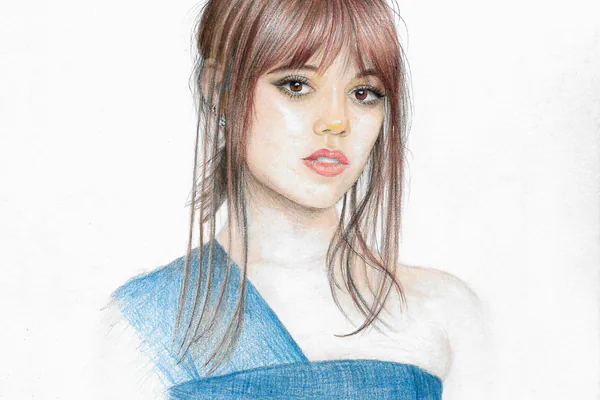
Jenna Ortega’s defining global breakthrough came with Wednesday, the Netflix series centered on Wednesday Addams. Netflix identifies the show as a mystery, comedy, and fantasy series, and official Netflix coverage describes Wednesday as smart, sarcastic, and emotionally guarded while investigating mysteries at Nevermore Academy. Ortega’s performance turned the character into a major streaming-era pop culture figure and brought her career to a new level of international visibility.
The role was demanding because Wednesday Addams is already iconic. The character existed before Ortega’s version, with a long history in comics, television, and film. Taking on a character with that much cultural memory requires confidence and restraint. Ortega had to honor the character’s deadpan spirit while creating a version that could lead a modern teen mystery series. Her performance used minimal blinking, controlled posture, precise speech, and a deliberately dry comic rhythm. Those choices helped make the character feel both familiar and new.
Working With the Wednesday Team
Netflix’s official Tudum interview gives useful context for how Ortega approached the part. In that interview, Ortega discussed being drawn to the character and the opportunity to work with a creative team connected to Tim Burton’s gothic visual language. Netflix’s coverage also notes that she moved to Romania for more than six months to film the series, which points to the scale of commitment involved.
The audition and production details matter because they show how much of Wednesday depended on finding the right lead actor. A series built around such a specific personality can fail if the central performance is too broad, too soft, or too imitative. Ortega’s version worked because it was disciplined. She did not simply play Wednesday as gloomy; she played her as intelligent, socially resistant, emotionally guarded, and quietly curious.
The Dance, the Tone, and the Internet Effect
One reason Wednesday became so visible was its connection to internet culture, especially the now-famous dance sequence. The scene spread across social media and introduced the series to viewers who may not have watched it immediately. But the long-term importance of the role goes beyond one viral moment. The performance gave Ortega a globally recognizable screen identity: controlled, darkly funny, and unusually self-possessed.
For SEO readers asking who Jenna Ortega is, Wednesday is often the starting point. For a complete biography, however, it is better understood as the moment when years of earlier work became visible at once. Disney audiences recognized her from family television. Horror fans recognized her from Scream and X. Streaming audiences recognized her from You. Wednesday brought those audiences together and gave her a single role that could travel across countries, platforms, and age groups.
Awards, Nominations, and Industry Recognition
Industry recognition followed Ortega’s rise. The Television Academy lists her as a performer and records one Primetime Emmy nomination: Outstanding Lead Actress in a Comedy Series in 2023 for playing Wednesday Addams and Goody Addams in Wednesday. That nomination was especially notable because it placed her among major television performers and confirmed that her Netflix work was being taken seriously by the industry, not only by viewers.
Awards are not the only measure of an actor’s value, but they do help show how a performance is received within professional circles. In Ortega’s case, the Emmy nomination signaled that Wednesday was more than a popular streaming hit. Her performance had enough craft, visibility, and cultural impact to be recognized in a major awards category.
Why the Emmy Nomination Mattered
The nomination mattered for several reasons. First, it recognized a young performer in a lead role, which is not easy in a crowded television field. Second, it honored a performance built on restraint rather than obvious emotional display. Third, it showed that genre-adjacent work, especially gothic comedy and mystery, can still earn serious acting attention when the performance is strong enough.
For Ortega’s career, the nomination strengthened her position as an actor who could carry major projects. Studios and streaming platforms pay attention to this kind of recognition because it suggests that an actor can attract audiences while also earning critical respect. That combination is valuable in an industry where visibility alone does not always translate into long-term credibility.
Acting Style, Public Image, and Creative Identity
Jenna Ortega’s acting style is often described through words like controlled, intense, dry, expressive, and emotionally precise. Those descriptions are useful, but they should be grounded in what she actually does on screen. She often plays characters who are observant before they are open, guarded before they are vulnerable, and sharp before they are sentimental. This pattern appears in different forms across her work, from Ellie in You to Tara Carpenter in Scream to Wednesday Addams.
Her public image has also become associated with thoughtful role selection. Rather than staying only in family entertainment, she moved into projects that explored grief, fear, identity, danger, and social alienation. That does not mean every role is the same. It means she has shown a clear interest in characters who have edges, secrets, or complicated emotional lives.
Dark Humor and Unconventional Characters
Netflix’s official interview with Ortega highlights her connection to darker humor and to Wednesday’s strange emotional world. That does not mean Ortega is the same as the characters she plays; actors are not their roles. But it does help explain why audiences found the casting believable. She could deliver a line with flat seriousness and still make it funny. She could stand still and still appear active. She could make a character’s silence feel like a choice rather than a blank space.
This kind of performance style is valuable in modern screen acting. Streaming close-ups reward small details: eye movement, stillness, timing, breath, and reaction. Ortega’s work often succeeds because she does not over-explain her characters. She lets viewers read tension beneath the surface.
Representation and Audience Connection
Ortega’s identity as a Latina actor has also shaped how audiences talk about her success. In an industry where leading roles for Latina performers have historically been limited, her visibility matters. She has appeared in family programming, prestige-adjacent drama, horror franchises, and a global Netflix series. That range makes her important not only as a celebrity, but as an example of how younger performers can move across categories without being reduced to one type.
At the same time, her career should not be defined only by representation. Her appeal comes from the combination of background, craft, timing, and role selection. She is discussed as a prominent Latina performer because that identity is real and meaningful, but she is also discussed as a strong actor because the work supports that reputation.
Notable Movies and TV Shows
Jenna Ortega’s filmography is broad for someone who began so young. The following list highlights major credits that help explain her career development. It is not a complete database, but it gives readers a clear path through the roles most often associated with her growth as an artist.
Key Television and Streaming Roles
- Jane the Virgin: Ortega played young Jane, helping introduce her to viewers of a respected television comedy-drama.
- Stuck in the Middle: Her Disney Channel lead role as Harley Diaz made her familiar to family audiences.
- Elena of Avalor: She voiced Princess Isabel, adding animation and voice work to her early career.
- You: Her role as Ellie Alves showed a sharper, older-skewing side of her screen presence.
- Wednesday: Her performance as Wednesday Addams became the central role of her global breakthrough.
Key Film Roles
- Iron Man 3: Disney’s D23 coverage notes Ortega’s appearance as the Vice President’s daughter, an early studio film credit.
- The Fallout: A major dramatic role that helped establish her range beyond family entertainment.
- Scream and Scream VI: Franchise horror roles that strengthened her genre profile.
- X: A Ti West horror film that placed Ortega in a stylish, adult genre context.
- Beetlejuice Beetlejuice: A high-profile studio sequel that connected her again with gothic comedy and the Tim Burton orbit.
What stands out across these credits is not just quantity, but progression. Ortega moved from child roles to family comedy, from voice acting to streaming thrillers, from drama to horror, and from franchise films to a globally recognized lead role. That progression is why a Jenna Ortega biography needs to be career-focused rather than limited to one viral moment.
Jenna Ortega Today
As of 2026, Jenna Ortega remains one of the most visible young actors in American film and television. Official Netflix pages continue to place Wednesday at the center of her public profile, with Netflix coverage also pointing to the show’s continuing life beyond its first season. Because streaming release plans, casting announcements, and production schedules can change, the best way to confirm current projects is to check official studio pages, Netflix’s Media Center or Tudum coverage, and Ortega’s verified Instagram account.
Her current relevance comes from several overlapping strengths. She has a major global role, a strong connection to genre audiences, a Disney background that gives her cross-generational recognition, and enough dramatic credibility to be considered for more serious material. She also belongs to a generation of performers whose fame is shaped by both traditional screen work and digital culture. A scene can become a social media phenomenon, but the career still depends on acting choices, stamina, and the ability to keep growing.
Why She Remains a Major Name
Ortega remains important because she occupies a rare position. She can headline a streaming series, appear in studio films, attract younger viewers, interest horror fans, and still be discussed in awards contexts. That combination makes her valuable to producers and compelling to audiences. She is not limited to one audience segment, and she has shown that she can handle both commercial visibility and demanding performances.
Her future career will likely continue to be judged by how she balances mainstream projects with riskier roles. The strongest version of her career is not simply more fame, but a filmography that keeps expanding her range. Based on her path so far, Ortega appears most compelling when she plays characters with intelligence, tension, humor, and emotional secrecy.
Conclusion
So, who is Jenna Ortega? She is an American actor from California’s Coachella Valley who grew from a child performer into a major figure in contemporary television and film. Her biography includes early auditions, family-audience visibility through Disney, voice work, a move into mature streaming and film roles, and worldwide recognition as Wednesday Addams. Along the way, she has earned industry attention, including a 2023 Emmy nomination listed by the Television Academy for Wednesday.
What makes Jenna Ortega’s career distinctive is the way she has connected different parts of the entertainment world. She is a former Disney lead, a respected genre performer, a dramatic actor, a streaming star, and a public figure whose heritage and representation matter to many viewers. Her story is still developing, but the foundation is already clear: Jenna Ortega has become one of the defining young actors of her era because she combines discipline, screen presence, and a willingness to choose characters who are memorable for more than fame alone.
Official references
- Jenna Ortega Official Instagram – Primary source for her own public posts, current projects, announcements, and wording that should be checked before quoting personal statements.
- Television Academy Jenna Ortega Profile – Official Emmy profile with birthday, birthplace, performer category, and Emmy nomination record.
- Netflix Media Center – Wednesday – Official Netflix source for Wednesday cast, production details, release information, and Netflix-hosted coverage involving Ortega.
- Netflix Tudum Jenna Ortega Interview – Official Netflix interview source for Ortega's comments about playing Wednesday and contextual details about the role.
- D23 – Everywhere You Can Find Jenna Ortega in the Worlds of Disney – Official Disney source for verifying her Disney credits, including Stuck in the Middle and Elena of Avalor.
