
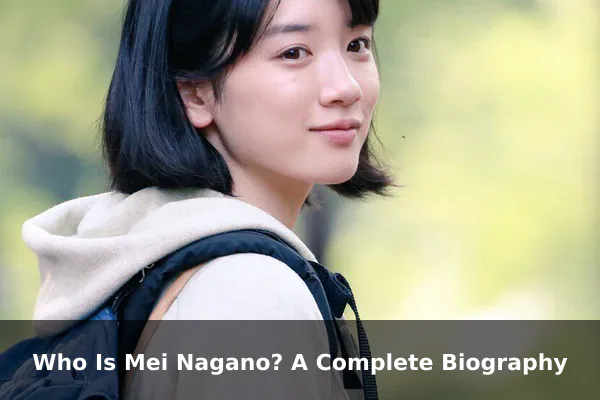
Mei Nagano is a Japanese actress and model known for a career that began in childhood and steadily expanded across film, television drama, fashion magazines, commercials, radio, and fan events. For many viewers, she is strongly associated with expressive, emotionally direct performances in youth stories, family dramas, romantic films, and contemporary television. Her name is also linked to major Japanese entertainment institutions, including NHK morning drama, commercial cinema, fashion media, and the Japan Academy Film Prize.
This complete biography of Mei Nagano focuses on verified public information and a clear career overview rather than private speculation. Key facts such as her birth date, birthplace, agency representation, selected credits, and award history are best checked through her Stardust Promotion profile, her official artist website, her official Instagram, the Japanese Film Database, and official award materials. Because she is an active living artist, some upcoming projects, schedules, events, and official announcements may change, so current activity should always be confirmed through those official channels.
What makes Mei Nagano an interesting figure in modern Japanese entertainment is not only the size of her filmography, but the way her career has moved from child performer to teen magazine model, then to lead actress in nationally visible dramas and films. Her story offers a useful example of how a contemporary Japanese actress can build recognition through a mixture of screen roles, fashion presence, carefully managed public appearances, and long-term agency development.
Mei Nagano at a Glance
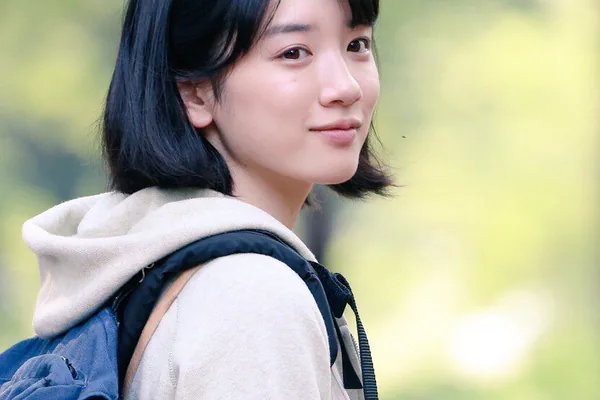
Mei Nagano, written in Japanese as Nagano Mei, was born on September 24, 1999, in Tokyo, Japan. Her official agency profile lists her as a talent under Stardust Promotion, one of Japan’s well-known entertainment agencies. Publicly, she is primarily described as an actress, though her career also includes modeling, voice work, radio appearances, books, calendars, public events, and commercial campaigns.
For readers discovering her for the first time, the simplest answer to who is Mei Nagano is this: she is a Japanese screen actress who rose from early film and television appearances into leading roles in popular dramas and films, including NHK’s morning drama Hanbun, Aoi., the police comedy-drama Hakozume, the film And So the Baton Is Passed, and several other projects confirmed by industry databases and official listings.
Basic Public Profile
- Full name: Mei Nagano
- Japanese name: Nagano Mei
- Date of birth: September 24, 1999
- Birthplace: Tokyo, Japan
- Main profession: Actress and model
- Agency: Stardust Promotion
- Official public channels: Stardust Promotion profile, official website, and official Instagram
These details may look simple, but they matter for an artist biography because they separate confirmed profile information from fan rumor or copied summaries. In Mei Nagano’s case, her agency profile is especially useful because it records her official biography, film credits, television credits, modeling background, event history, awards, and recent announcements in one place.
Why Her Name Is Widely Recognized
Mei Nagano became widely recognized because her work reached several different audiences at once. Television viewers know her from serial dramas and prime-time roles. Film fans may recognize her from romance, comedy, literary adaptation, and human drama projects. Fashion readers may remember her magazine modeling period, especially her work with youth fashion publications. This cross-media path helped her become more than a single-role actress; it made her a familiar public figure across Japanese popular culture.
Early Life and Path Into Entertainment
Mei Nagano was born and raised in Tokyo, a city that sits at the center of Japan’s entertainment industry. Public biographies do not need to overreach into private childhood details, but the official record shows that she entered the entertainment world early. Her Stardust Promotion profile describes her film debut as taking place in 2009, which means she began working professionally while still young.
That early start is important because Japanese entertainment often develops young performers through a combination of small screen appearances, magazine work, auditions, commercials, and supporting roles before they become household names. Nagano’s career followed that gradual pattern. Rather than appearing suddenly as an adult lead, she built experience through child and teen roles, then moved into more visible projects as her acting range and public profile grew.
Modeling Before Mainstream Acting Fame
Before many international viewers knew her through television drama or film, Nagano developed a public image through modeling. Her official profile lists regular modeling work with youth-oriented magazines, including Nico Puchi, nicola, and Seventeen. These magazines have played an important role in introducing young Japanese talents to readers who follow fashion, beauty, teen culture, and entertainment trends.
Modeling gave Nagano a different kind of visibility from acting. A drama role asks an audience to believe in a character, while magazine work asks readers to connect with an image, mood, and personal style. That combination helped shape the approachable, fresh, and photogenic public presence that later supported her acting career. It also gave her experience in front of cameras outside the structure of scripted performance.
Early Screen Experience
Her early film credits include appearances recorded in official and industry sources, such as Hard Revenge, Milly: Bloody Battle, Zebraman 2: Attack on Zebra City, and later Rurouni Kenshin. For a young performer, such projects can provide practical training: learning set discipline, camera blocking, timing, continuity, and how to work with directors, senior actors, and production teams.
These early credits are not merely trivia. They show that Nagano’s later success was built on years of practical experience. By the time she began taking higher-profile teen and lead roles, she had already spent time inside professional productions and had learned how Japanese film and television sets operate.
Breakthrough and Rise as an Actress
Mei Nagano’s rise as an actress can be understood as a series of widening circles. First came child and supporting work. Then came teen-oriented magazines and youth roles. After that, she began receiving parts that placed her closer to the center of major films and television dramas. This gradual growth helped her avoid being defined by only one type of project.
One major step was her role as Rinko Yamato in the live-action film My Love Story!!, released in 2015. The project introduced her to audiences who follow manga adaptations and youth romance films. In 2017, she appeared in multiple notable films, including Daytime Shooting Star, Teiichi: Battle of Supreme High, Peach Girl, Parks, and Mixed Doubles. That concentration of film work gave her a stronger presence in mainstream cinema.
NHK Morning Drama Visibility
A defining breakthrough came in 2018, when Nagano was selected as the heroine of the NHK morning drama Hanbun, Aoi.. NHK’s asadora format is one of the most visible platforms in Japanese television because it runs across many episodes and often reaches viewers across generations. Playing the heroine in this format can significantly raise an actor’s public recognition.
In Hanbun, Aoi., Nagano played Suzume Nireno, a heroine whose life story unfolds across family, work, dreams, setbacks, and personal relationships. The role gave her the opportunity to carry a long-running drama rather than appear only in a supporting capacity. It also helped establish her as an actress who could handle warmth, vulnerability, humor, and emotional growth over an extended narrative.
From Youth Star to Lead Performer
After Hanbun, Aoi., Nagano’s career moved into a more mature phase. She continued to appear in school and youth settings, but she also took on stories involving work, family, grief, identity, and social responsibility. This transition matters because many performers who begin as teen models or youth actresses face the challenge of developing adult credibility. Nagano’s later roles show a deliberate broadening of tone and genre.
Her 2021 work is especially notable. That year included television drama visibility through Hakozume and major film projects such as Hell’s Garden, It’s a Flickering Life, and And So the Baton Is Passed. The combination of comedy, ensemble drama, film heritage, and emotional family storytelling helped strengthen her reputation as a versatile performer.
Notable Film and Television Roles

Mei Nagano’s filmography is broad enough that a complete biography cannot treat every title with equal weight. A more useful approach is to focus on selected works that mark changes in her public image, acting range, or industry standing. The Japanese Film Database confirms several of her film appearances, while her Stardust Promotion profile provides a wider official career list across film and television.
My Love Story!!
My Love Story!! was an important youth romance project in Nagano’s early rise. In the film, she played Rinko Yamato, a role connected to a popular manga property. Live-action manga adaptations can be demanding because fans often bring strong expectations about character tone, appearance, and emotional energy. Nagano’s casting helped introduce her to audiences who follow young romantic leads and school-age storytelling.
The role also fits an early pattern in her career: characters who appear gentle or bright on the surface but still need emotional sincerity to work on screen. This kind of role can be underestimated, but it requires precise balance. If played too lightly, the character feels flat; if played too heavily, the charm disappears. Nagano’s later career suggests that this balance became one of her strengths.
Daytime Shooting Star and 2017 Film Momentum
In 2017, Daytime Shooting Star placed Nagano in another lead role connected to a well-known romance manga. That same year, her credits also included Teiichi: Battle of Supreme High, Peach Girl, Parks, and Mixed Doubles. This was a busy period that increased her visibility across different tones, from romantic drama to comedy and ensemble cinema.
For an actress moving from promising newcomer to recognizable young star, volume alone is not enough. The important point is variety. Nagano was not only repeating the same character in different costumes. She was appearing in projects with different directors, casts, source materials, and audience expectations. This helped her develop a screen identity that could travel between commercial entertainment and more character-driven work.
Hanbun, Aoi.
Hanbun, Aoi. remains one of the key titles in any Mei Nagano biography. As an NHK morning drama heroine, she became part of a tradition that has helped launch or strengthen many Japanese acting careers. The format demands stamina because the character must remain engaging across a long broadcast period, often moving through different life stages and emotional arcs.
Nagano’s role as Suzume Nireno brought her to a broad national audience. It also demonstrated her ability to lead a story that was not limited to a two-hour film or a short drama season. The role became a major reference point in discussions of her career because it helped shift her from rising young actress to nationally recognized performer.
3 Nen A Gumi and Post-Asadora Recognition
After her NHK breakthrough, Nagano appeared in 3 Nen A Gumi: Ima kara Mina-san wa, Hitojichi desu, a high-profile school suspense drama. While the series is often discussed for its ensemble cast and intense premise, Nagano’s participation kept her visible to younger drama audiences and reinforced her connection to contemporary television storytelling.
This stage of her career shows how she remained active in ensemble contexts even after gaining lead recognition. That is significant because strong actors often continue to benefit from ensemble work. It allows them to respond to different performance rhythms and avoid becoming locked into a single star-centered formula.
Hakozume
Hakozume, also known through its police box setting, became another major television title in Nagano’s career. Her official profile lists the drama as a W lead project in which she played Mai Kawai. The series mixed workplace comedy, police procedural elements, and character-based storytelling, giving Nagano room to show timing, uncertainty, sincerity, and growth within a professional setting.
The role is useful for understanding her appeal because it is not built only around glamour or romance. It asks the audience to follow a young woman learning, making mistakes, absorbing responsibility, and developing confidence. That type of character can strengthen an actress’s connection with viewers because it feels close to everyday anxieties about work, adulthood, and self-trust.
And So the Baton Is Passed
And So the Baton Is Passed is one of the most important films in Mei Nagano’s award history. The official Japan Academy Film Prize list for the 45th awards includes Nagano among the Outstanding Lead Actress recipients for this film. Stardust Promotion also identifies the project as a major point in her recognition as a film actress.
The film’s emotional focus on family ties, identity, and inherited love matched Nagano’s ability to express openness without losing complexity. Awards do not define an entire career, but they can help confirm that industry observers saw her performance as more than a popularity moment. In this case, the recognition strengthened her standing as a lead actress in Japanese cinema.
My Broken Mariko and Expanding Emotional Range
My Broken Mariko, released in 2022, showed another side of Nagano’s screen work. The story involves grief, friendship, anger, and emotional release, making it different from the softer youth romance image some viewers may associate with her earlier projects. Her role as Tomoyo Shiino is listed in the Japanese Film Database and her agency profile.
This type of performance is important in a biography because it shows artistic risk. A performer who begins in bright youth roles can deepen public respect by taking on parts that are rawer or less polished. My Broken Mariko helped demonstrate that Nagano could carry heavier emotional material while still keeping the audience connected to the character’s inner life.
Recent and Current Screen Work
Nagano’s official profile includes later titles such as Motherhood, Mom, Is That You?!, Teasing Master Takagi-san, Cells at Work!, Kakukaku Shikajika, and the TBS drama Caster. It has also listed a Netflix film project planned for 2026. Because release schedules, streaming availability, and promotional details can change, readers should verify current listings through her agency profile and official website.
These recent credits show that Nagano continues to work across multiple formats: theatrical films, streaming projects, network dramas, and adaptations of well-known properties. That range is one reason her biography remains active rather than historical. She is not only remembered for a single breakout role; she continues to add new chapters to her public career.
Awards, Recognition, and Industry Standing
Mei Nagano’s awards and nominations help explain how her career is viewed within the Japanese entertainment industry. Her official agency profile lists several honors, including newcomer recognition and later acting awards. The Japan Academy Film Prize official materials confirm her 45th Japan Academy Film Prize Outstanding Lead Actress recognition for And So the Baton Is Passed.
Her agency profile also lists recognitions such as the Elan d’or Newcomer Award in 2019, the Hashida Award Newcomer Award, the Hochi Film Award Best Actress honor, Blue Ribbon Award recognition, and Japan Academy Film Prize supporting actress honors in later years. These awards come from different parts of Japan’s entertainment and media landscape, which suggests that her recognition has not been limited to a single project or a single voting body.
What the Awards Suggest
Awards should be interpreted carefully. They do not prove that one actor is objectively better than another, and they should not replace direct viewing of the work. However, they do provide evidence that industry organizations, critics, or media groups have recognized a performer at specific points in time. In Nagano’s case, the awards show a career pattern: newcomer attention after national television visibility, then later recognition for lead and supporting film performances.
Industry Position
Nagano’s standing can be described as that of an established contemporary Japanese actress with cross-media reach. She is young enough that much of her career may still be ahead of her, but she already has a long list of credits because she started early. That combination makes her unusual: she has the resume of a veteran in some respects, while still belonging to a generation of actors shaping current Japanese screen culture.
Public Image, Style, and Fan Appeal
Mei Nagano’s public image is built around approachability, expressive warmth, and a clean visual presence shaped by years of modeling and camera work. Her official photos, magazine history, and public appearances often present her as bright and natural rather than distant or overly theatrical. This image supports the kinds of roles for which she is known, especially characters who invite empathy quickly.
At the same time, reducing her appeal to charm alone would be inaccurate. Her stronger performances often involve emotional transitions: innocence to maturity, confusion to resolve, grief to release, or professional uncertainty to confidence. The best explanation for her popularity is the combination of accessible public presence and a performance style that can carry sincere emotional stakes.
Fashion and Modeling Influence
Her modeling background continues to matter even after her acting career became central. Magazine work teaches performers how to communicate with posture, expression, styling, and stillness. For an actress, those tools can translate into screen presence. Nagano’s fashion history also helps her remain visible outside drama broadcast cycles, especially through calendars, books, events, and promotional campaigns.
Fan Events and Direct Audience Connection
Her official website has been used for fan-facing events, including materials connected to her 2023 Nippon Budokan event. Such events show that her career includes more than scripted performance. They create a space where fans connect with the artist’s public persona, merchandise, announcements, and special appearances. For a modern Japanese actress, this kind of official event presence can deepen loyalty and keep fans engaged between releases.
Official Channels and Current Activity
Because Mei Nagano is an active artist, official channels are essential for accurate information. Search results, fan pages, and reposted summaries can be useful for discovery, but they may be outdated or incomplete. Readers who want current facts should prioritize primary and official sources.
Where to Check Reliable Updates
- Stardust Promotion official profile: Best for agency-confirmed biography, credits, awards, and current work listings.
- Mei Nagano official website: Useful for official event information, fan-facing announcements, and special project pages.
- Official Instagram: Useful for first-person public updates, visual posts, campaign notices, and current activity signals.
- Japanese Film Database: Helpful for checking film credits and role listings in an industry database context.
- Japan Academy Film Prize official materials: Important for confirming award recognition rather than relying on copied summaries.
These sources serve different purposes. An agency profile is structured and career-focused. An official website may focus on events or announcements. Instagram is more immediate but less complete as a biography source. Industry databases help verify credits, while award sites help verify recognition. A careful biography should use them together rather than depending on one fan-edited summary.
Why Verification Matters
Artist biographies are often copied across the internet, and small errors can multiply quickly. Dates, award names, role names, and project release details are especially vulnerable to mistakes. In Nagano’s case, the safest approach is to distinguish between confirmed public facts and interpretation. It is fair to analyze her career direction, performance style, or public image, but claims about personal life, private relationships, finances, or unannounced projects should not be treated as fact without official confirmation.
Why Mei Nagano Matters in Contemporary Japanese Entertainment
Mei Nagano matters because her career reflects several important shifts in Japanese entertainment. She represents a generation of performers who move fluidly between film, television, streaming platforms, fashion media, social media, and live events. Her career is not built on one medium alone. Instead, it shows how modern actors maintain visibility across many connected spaces.
She also matters because she has moved from youth-oriented work into broader adult roles without abandoning the qualities that made audiences notice her. The freshness associated with her early modeling and romantic roles remains part of her image, but her later projects have asked for more emotional weight, workplace comedy timing, grief, maturity, and dramatic responsibility.
A Career Built on Continuity
One of the clearest themes in Mei Nagano’s biography is continuity. She did not become known through a single viral moment and disappear. Her public career includes early child roles, teen magazine modeling, youth films, NHK drama, commercial cinema, awards recognition, streaming work, radio, calendars, and official events. This continuity makes her a strong subject for an artist biography because readers can trace development rather than only listing isolated highlights.
Cross-Media Appeal
Nagano’s appeal also comes from her ability to fit different entertainment contexts. In a film, she can support a carefully shaped emotional arc. In television, she can build familiarity over multiple episodes. In modeling, she can communicate style and personality through images. In fan events, she can participate in a more direct public relationship with supporters. Together, those contexts make her a recognizably modern Japanese artist.
Conclusion
Mei Nagano is a Tokyo-born Japanese actress and model whose career has grown from early screen appearances into major television dramas, prominent films, modeling work, public events, and award-recognized performances. Her official biography shows a performer who began young, developed steadily, and became widely known through projects such as Hanbun, Aoi., Hakozume, And So the Baton Is Passed, and other film and television roles.
A complete biography of Mei Nagano should recognize both her public charm and her professional range. She has played romantic leads, workplace beginners, emotionally burdened young women, family-centered characters, and roles within major adaptations. Her awards and official credits show that she is not only a familiar face, but an actress whose work has been acknowledged by Japanese entertainment institutions.
For readers asking who is Mei Nagano, the answer is best understood in layers: she is a former youth model, a long-working screen performer, an NHK morning drama heroine, an award-recognized film actress, and an active contemporary Japanese artist with official channels that continue to document her evolving career. As her future projects develop, the most accurate way to follow her story is through verified agency updates, official announcements, and confirmed industry sources.
Official references
- Stardust Promotion official Mei Nagano profile – Primary agency profile for birth date, birthplace, representation, official biography, current updates, and career credits.
- Mei Nagano official website – Official artist/event site useful for confirming official channels and fan-facing announcements.
- Mei Nagano official Instagram – Primary social account for first-person updates and verifying public statements or current activity.
- JFDB – Japanese Film Database: Mei Nagano – Industry database co-managed by the Japan Foundation and UNIJAPAN, useful for confirming film credits and roles.
- Japan Academy Film Prize official site – Official award reference for verifying Japan Academy Film Prize recognition connected to her film career.
